Hematology for parasitologists


USDB1
Enrollment is Closed

About This Course

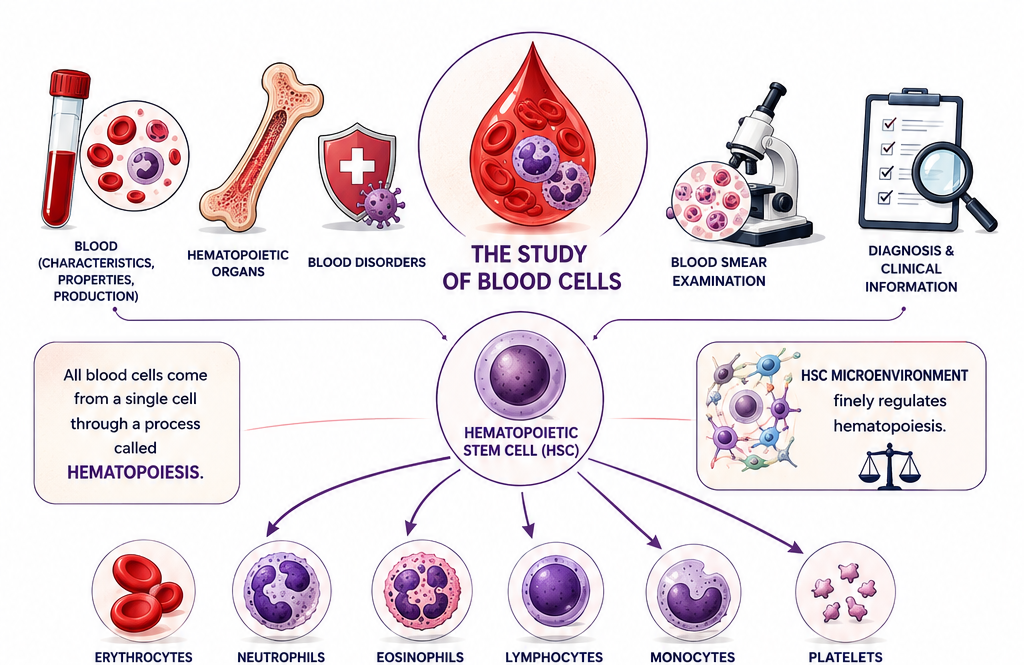
Blood contains several types of cells. Each of these cell types has a fairly distinct appearance, and each has a specific biological function. Despite the extreme structural and functional differences between blood cells, they are the offspring of a single type of cell: the hematopoietic stem cell (HSC), which can be transformed into any blood cell depending on the physiological needs of the organism through a process called Hematopoiesis.

Hematopoiesis is finely regulated by HSC microenvironment, and any disruption can throw this entire process off balance. Examining the appearance of cells on a blood film is central to the diagnosis of blood cell diseases and can give important information about numerous other diseases that are reflected in quantitative or qualitative changes of blood cells.

When hematopoiesis is disrupted, this may result in either a decrease or an overproduction of cells. The resulting dysregulation may also differ depending on the origin/location of the problem (bone marrow or peripheral). However, given the close relationship between the structure and characteristics of blood cells, and the kinetics of hematopoiesis on the other hand, a simple blood analysis (complete/full blood count and blood smear) can very well provide information on the origin and etiology of the problem.

Parasitic infections are one of those factors that can impair normal blood function. The impact varies from mild changes affecting a single blood cell lineage to severe disturbances involving the entire hematological system.

Through these lectures, you, as future biologists/parasitologists, will be trained to master the blood formula and the interpretation of its various physiological or pathological variations, particularly in the case of parasitic infections.

Requirements

Basic knowledge in Cell Biology; Histology/Blood Tissue, and Immunology.

Course Staff

Course Staff Image #1

Staff Member #1

Allaoui Amine, PhD in animal physiology

Allaoui Amine is an Algerian academic affiliated with Blida 1 University.

He graduated from Tiaret University with a degree in Biochemistry

He continued his postgraduate studies at Oran 1 University, with a focus on Clinical and Metabolic Nutrition, where he obtained a doctorate degree.

He works now as lecturer (class A) in biological sciences, with specialization in Biochemistry Animal Physiology

He has prepared various contents, in particular on animal reproduction, and Hematology. He is currently a member of the university’s Distance Learning Commission.

He has several scientific contributions as publications and conference communications that mainly focus on: § biological effects of natural bioactive compounds and food-derived proteins, § the relationship between nutrition, oxidative stress, and metabolic health. § research on nutraceutical development for the prevention of metabolic diseases

Frequently Asked Questions

What web browser should I use?

The Open edX platform works best with current versions of Chrome, Edge, Firefox, or Safari.

See our list of supported browsers for the most up-to-date information.

Question #2

Your answer would be displayed here.